// about matt
About Matt
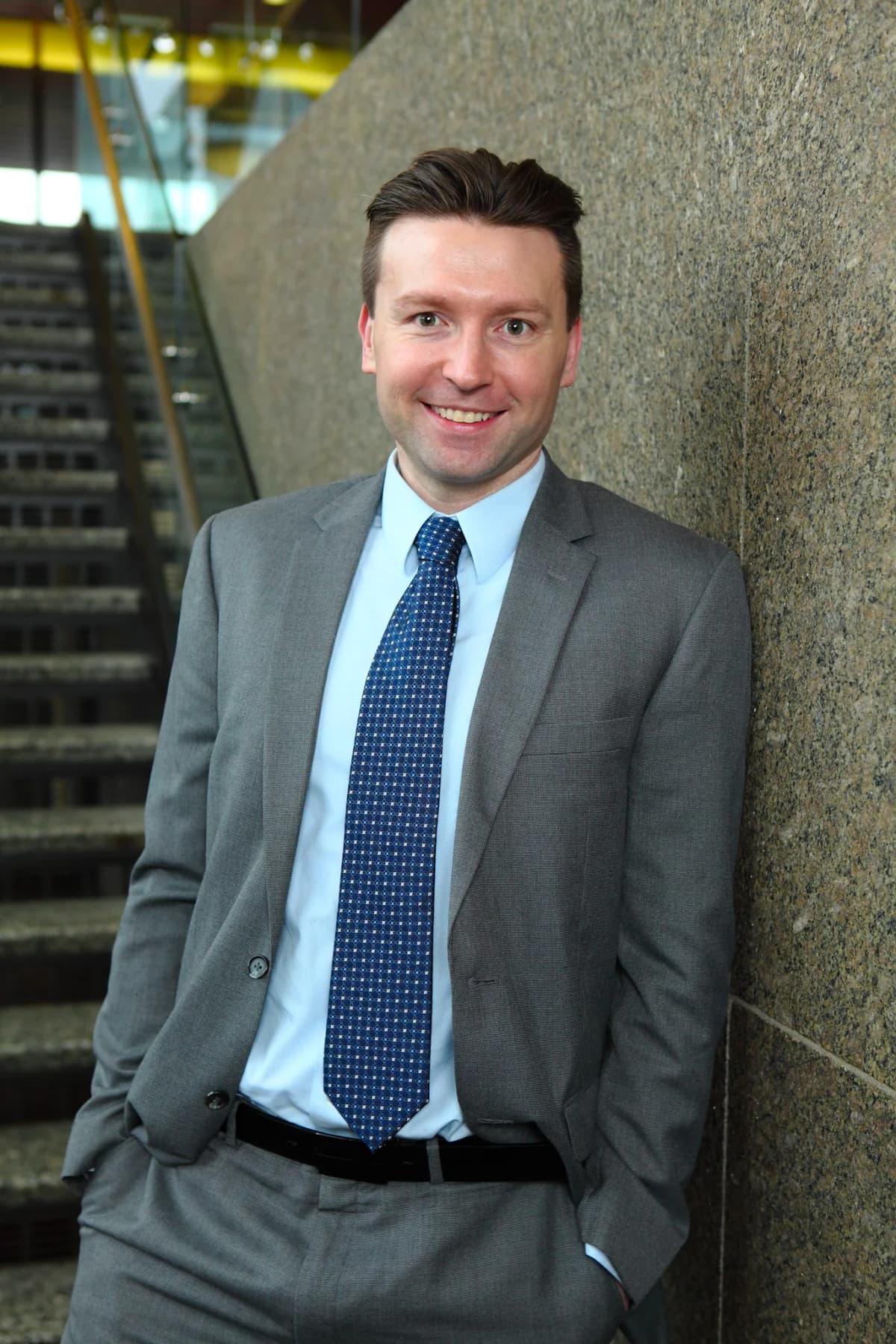

I help people understand complicated technologies. My expertise is in how we interact with technology, how technology interprets our behavior, and the sometimes unpredictable consequences. I focus on building safer, more responsible systems.
Why people bring me in
When the evidence is messy or contradictory, and the stakes are high, I bring clarity and solutions.
My combination of deep platform experience (Meta, civic integrity, online safety) and a history of publishing in top-tier peer-reviewed journals uniquely positions me to translate technical complexity into clear actionable language for legal, policy, and organizational audiences.
From academia to industry
I started as a social psychologist. As an award-winning professor at the University of Illinois at Chicago in both the psychology and political science departments, I directed a research lab studying intergroup conflict, ideological migration, and motivated reasoning. I published 60+ peer-reviewed articles that have been cited 23,000+ times, and my work was featured in major outlets including The New York Times, The Washington Post, NPR, The LA Times, and The Guardian.
Along the way, I co-founded Civil Politics with Jonathan Haidt and Ravi Iyer — a non-profit dedicated to evidence-based practices for constructive civil dialogue. I served as Research Director at the Constructive Dialogue Institute (originally the OpenMind Platform), an ed-tech startup aiming to promote more constructive dialogue. There, I raised ~$4.3M in grants and gifts, engineered a data pipeline, built a real-time dashboard, conducted numerous studies and a cluster-randomized controlled trial experiment, and helped grow the user base from 350 students at 5 universities to more than 16,000 students at 400+ universities.
At Meta, I led research on civic integrity, COVID-19, and high-stakes product and policy questions related to what billions of people see online. That experience gave me direct exposure to how large-scale technologies operate in practice — and how product decisions, incentives, and human behavior can interact in unexpected and sometimes harmful ways.
What I do now
Since leaving Meta, I've put my experience to work independently across advisory projects, expert witness engagements, workshops, speaking, and public-interest work.
As Senior Advisor at USC's Neely Center for Ethical Leadership and Decision-Making, I oversaw the Social Media Index — the first publicly available longitudinal scientific comparison of positive and negative experiences across major social platforms.
As a Resident Research & Policy Fellow at the Integrity Institute, I wrote best-practices guides including the EDMO platform data handbook, advised the US Senate Judiciary Committee ahead of the 2024 child safety hearings with tech CEOs, and ran workshops for the European Commission, the European Digital Media Observatory, and the Bamako Forum.
My work today spans trust and safety, child safety, well-being, recommendation systems, platform governance, misinformation, technology-facilitated political violence, gender-based harms, and the broader relationship between technology and society. The through-line is the same: helping people make sense of complex systems clearly enough to improve them.
I care deeply about helping non-experts understand complicated systems without flattening the details that matter.
That means translating technical, behavioral, and institutional complexity into language that lawyers, policymakers, journalists, researchers, and organizations can actually use.
// current roles
Independent advisor, speaker, and expert witness
Senior Advisor
Neely Center for Ethical Leadership & Decision-Making, USC
Invited Member, Expert Working Group on Recommender Systems
Knight-Georgetown Institute
Communications Committee Advisor and Community Leadership Council member
Integrity Institute
Senior Advisor
Psychology of Technology Institute
// the full record